
Currently Empty: ₹0.00
+91 96387 05247
Ahmedabad, Gujarat, India.
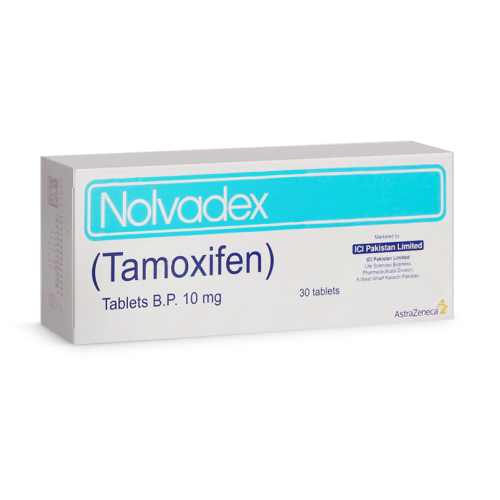
| Product Name | Nolvadex |
|---|---|
| Main Constituent | Tamoxifen |
| Intended Use | Management and prevention of hormone receptor-positive breast cancer |
| Formulations Available | 10 mg, 20 mg tablets |
| Initiation of Therapeutic Effect | Usually begins within several weeks of daily use |
| Typical Duration per Dose | Active in the body for 5–7 days (elimination half-life up to 7 days) |
| Administration Schedule | Once daily, at the same time each day |
| Prescription Status | Prescription required in United States (FDA-regulated) |
| Estimated Price Range | $30–$90 per month (generic), depending on pharmacy and insurance coverage |
Nolvadex, containing the active ingredient Tamoxifen, is a widely used medication for treating and reducing the risk of hormone receptor-positive breast cancer. It is legally available with a prescription in the United States under FDA regulation, and comes in tablet form to be taken daily as directed by your healthcare provider.
Breast cancer affects a significant number of women and some men in the United States, and facing a diagnosis can feel isolating. However, you are not alone in this experience, and many effective treatments are available. According to the American Cancer Society (2023), approximately 297,790 new cases of invasive breast cancer are diagnosed in U.S. women each year, making it the most common cancer after skin cancer. Early detection, improved therapies, and long-term management strategies mean that most breast cancers—especially hormone receptor-positive types—are treatable, with survival rates steadily improving over recent decades. If you or a loved one is dealing with a breast cancer diagnosis, you are joining millions who have faced this challenge and benefited from established, evidence-based treatment pathways.
Nolvadex (Tamoxifen) is classified as a selective estrogen receptor modulator (SERM). It acts by attaching to estrogen receptors on breast cancer cells, effectively blocking estrogen—a hormone that can stimulate the growth of certain breast tumors—from activating these receptors. Imagine the estrogen receptor as a lock and estrogen as the key; Nolvadex fits into the lock, preventing the real key (estrogen) from turning it. For patients, this means that Nolvadex helps slow or stop the growth of hormone receptor-positive breast cancer and reduces the risk of recurrence after initial treatment.
This medication doesn’t cause an immediate change you can feel, as painkillers might. Instead, its benefits unfold over weeks to months. Most patients notice no direct sensation from Nolvadex itself. The practical consequence is a reduced risk of cancer returning or developing, which is typically confirmed by follow-up tests and imaging during your care. In clinical trials, Nolvadex has been shown to reduce the risk of breast cancer recurrence by up to 40-50% in certain populations over five years of use (National Cancer Institute, 2022). This impact is substantial for many patients and underlies its widespread use in breast cancer management and prevention.
| Your Situation | Is Nolvadex Appropriate? | Clinical Reason |
|---|---|---|
| Newly diagnosed with hormone receptor-positive (ER+) breast cancer | Yes | Nolvadex is standard therapy to lower risk of recurrence in ER+ cases. |
| Completed initial breast cancer treatment, seeking to prevent recurrence | Yes | Adjuvant Tamoxifen therapy for 5–10 years decreases risk of return. |
| At high risk for breast cancer but no diagnosis (family history, BRCA mutation) | Possibly | Used for risk reduction; discuss risks and benefits with your oncologist. |
| Postmenopausal and intolerant to Tamoxifen | No | Aromatase inhibitors may be preferred due to different side effect profiles and superior efficacy post-menopause. |
| Hormone receptor-negative (ER-, PR-) breast cancer | No | Tamoxifen is not effective for tumors lacking hormone receptors. |
| Previous serious blood clot (DVT/PE) | Generally not recommended | Tamoxifen increases clot risk; alternative strategies may be safer. |
This table presents common scenarios encountered in practice. If your situation isn’t described here or is complex, a breast cancer specialist can individualize recommendations for you.
Always inform your doctor about all medications, including over-the-counter products and supplements, to avoid unwanted interactions. Adherence to the prescribed regimen is critical for optimal outcomes.
If you fall into any of these categories, your care team will discuss alternative therapies or additional precautions.
Most individuals tolerate Nolvadex well, but side effects should be reported promptly. Your doctor may adjust your treatment plan if necessary.
Given the complexity of cancer regimens, always confirm with your physician or pharmacist before adding new prescriptions or supplements. If in doubt, err on the side of caution and consult before making changes.
| Medication | When Preferred | Key Advantages | Limitations |
|---|---|---|---|
| Nolvadex (Tamoxifen) | Premenopausal and some postmenopausal women with ER+ breast cancer; breast cancer risk reduction | Long track record, effective in premenopausal women, affordable generics available | Not suitable for ER-negative tumors, increases risk of clots and endometrial cancer, menopausal side effects |
| Aromatase Inhibitors (e.g. Anastrozole, Letrozole) | Postmenopausal women with ER+ breast cancer | Greater efficacy than Tamoxifen post-menopause, lower clot risk | Not for premenopausal women, more bone loss, joint pain |
| Raloxifene | Breast cancer prevention in high-risk postmenopausal women | Reduces breast cancer risk, lower risk of uterine cancer | Not used for active cancer treatment, similar clot risk |
| Fulvestrant | Advanced/metastatic ER+ breast cancer after other therapies | No oral estrogenic effects, for resistant cases | Injection only, more expensive, not first-line |
Nolvadex remains the standard for many premenopausal patients and some postmenopausal women who cannot take aromatase inhibitors. The choice depends on factors like menopausal status, side effect tolerance, cancer stage, and other health conditions. Discussing your goals, medical history, and preferences with your oncology team ensures the best personalized decision.
In the United States, Nolvadex (Tamoxifen) is available by prescription only. The FDA oversees its approval and quality, helping ensure that generic versions are equally effective and safe. Pharmacies (both local and online) can dispense Tamoxifen once a valid prescription is provided. Some online platforms also offer telemedicine consultations, which can generate a prescription if you are eligible. Insurance coverage varies; most plans cover generic Tamoxifen for approved indications, but co-pays differ by plan and pharmacy.
| Expense Category | Approximate Cost (USD) | Context/Notes |
|---|---|---|
| Oncology consultation (in-person or telemedicine) | $100–$350 per visit | May be lower if covered by insurance or cancer program |
| Prescription cost (if not included in visit) | $0–$30 | Some clinics charge separately, others include in visit fee |
| Nolvadex/Tamoxifen 20mg (30 tablets, 1 month supply) | $30–$90 (generic); $300+ (brand) | Varies by pharmacy, insurance, and manufacturer |
| Delivery (if ordering online) | $5–$20 | Standard shipping; expedited options may cost more |
| Total estimated cost (first month) | $135–$490 | Lowest scenario: insured, generic, standard delivery; highest: uninsured, brand, in-person |
Most patients use generic Tamoxifen, which is significantly less expensive than the branded version. Many pharmaceutical assistance programs exist to reduce out-of-pocket costs, especially for uninsured patients. Make sure to inquire about these options at your pharmacy or with your care team.
Doctor’s Perspective: “Tamoxifen has transformed the outlook for hormone receptor-positive breast cancer. The most important thing is open communication—if you experience symptoms or concerns, share them early. We have tools to adjust your treatment if needed, and your voice is a crucial part of your care.” — Dr. Jessica Lee, MD, Breast Cancer Specialist, United States