
Currently Empty: ₹0.00
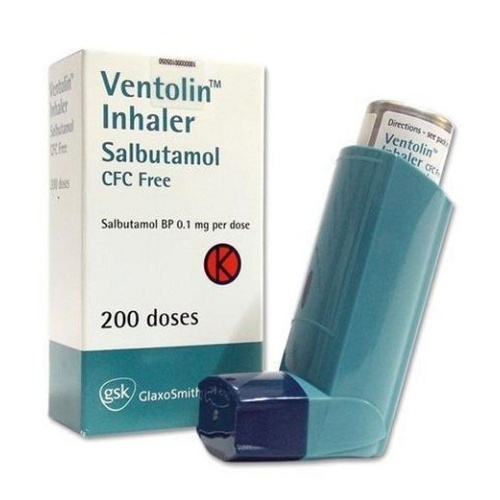
Ventolin Inhaler works by selectively activating beta-2 adrenergic receptors in the smooth muscle lining your airways. These receptors are part of the sympathetic nervous system and, when stimulated by albuterol (the active component), trigger a signaling cascade that results in relaxation of airway muscles. This process is called bronchodilation.
On a cellular level, albuterol increases the production of cyclic adenosine monophosphate (cAMP) via activation of adenylate cyclase. Higher cAMP levels cause smooth muscle relaxation, resulting in widened airways and easier breathing.
Simplified metaphor: Imagine your airways are like a narrow tunnel during an asthma attack. Ventolin Inhaler acts like an emergency crew that quickly widens the tunnel, allowing traffic (air) to flow again.
Does Ventolin Inhaler work independently? Yes, it works regardless of specific triggers, but is most effective when airways are constricted (e.g., due to an asthma attack or exercise-induced bronchospasm).
Bottom line: Ventolin Inhaler provides rapid relief of asthma symptoms but does not treat the underlying inflammation. For long-term asthma control, additional medications (like inhaled corticosteroids) are typically needed.
References: FDA label, American Academy of Allergy, Asthma & Immunology guidelines (see below).